AI and the Art of Data Protection: An IT Strategy for Mitigating Emerging Security Risks
The Rising Threat of AI-Related Data Leakage
The rapid adoption of Artificial Intelligence (AI) tools in the workplace has introduced a new and complex challenge for IT departments: the rise of “Shadow AI.” This term refers to the unauthorized use of AI applications by employees, often without the knowledge or approval of their organization’s IT teams. As AI tools become more accessible and user-friendly, employees are increasingly turning to these platforms to boost productivity and solve problems, inadvertently creating significant security risks.
Recent studies indicate that the prevalence of Shadow AI is alarmingly high. By 2027, it’s projected that 75% of employees will acquire, modify, or create technology outside of IT’s direct visibility, a substantial increase from 41% in 2022. More concerning is the fact that 38% of employees admit to sharing sensitive work information with unapproved AI tools, directly jeopardizing proprietary data.
The risks associated with data leakage through AI platforms are multifaceted and severe. Large language models (LLMs) and other AI systems handle vast amounts of data, including personal information, financial records, and proprietary research. These platforms can inadvertently memorize and reproduce sensitive information from their training data or user prompts, leading to critical privacy leaks. Moreover, the opaque nature of many AI models—often referred to as the “black box” problem—makes it challenging to audit or trust these systems with traditional security approaches.

The impact of AI-related data leakage on organizational security and compliance is profound. Unauthorized sharing of sensitive data with AI tools can lead to:
- Intellectual Property Theft: AI models representing significant investments can be stolen or reverse-engineered by competitors.
- Regulatory Violations: Uncontrolled data sharing may breach regulations like GDPR, HIPAA, or industry-specific compliance requirements.
- Reputational Damage: Public exposure of data leaks can severely harm an organization’s reputation and customer trust.
- Financial Losses: Both in terms of potential fines for non-compliance and the loss of competitive advantage due to leaked proprietary information.
- Increased Vulnerability to Cyber Attacks: Exposed data can be exploited by malicious actors for more targeted and sophisticated attacks.
The challenge for IT departments is not just technical but also cultural. Employees often turn to Shadow AI out of a genuine desire to be more productive or innovative. This means that a purely restrictive approach is likely to be ineffective and may even hinder organizational growth and innovation. Instead, IT teams must develop strategies that balance security needs with the potential benefits of AI adoption, fostering a culture of responsible AI use while implementing robust technical controls to mitigate risks.
Establishing a Robust AI Governance Framework
Establishing a robust AI governance framework is crucial for organizations to effectively manage the risks associated with AI adoption while harnessing its benefits. This framework serves as the foundation for all AI-related activities within the organization, ensuring that AI use aligns with ethical standards, regulatory requirements, and organizational goals.
Developing Clear AI Acceptable Use Policies

At the heart of AI governance is a well-defined AI Acceptable Use Policy (AUP). This policy should clearly outline:
- Approved AI tools and platforms
- Guidelines for data handling when using AI
- Prohibited uses of AI
- Consequences for policy violations
The AUP should be comprehensive yet accessible, providing clear guidance to employees at all levels. It’s important to strike a balance between enabling innovation and ensuring security. Rather than outright banning AI tools, the policy should focus on guiding responsible use.
Importance of Data Classification and Audits
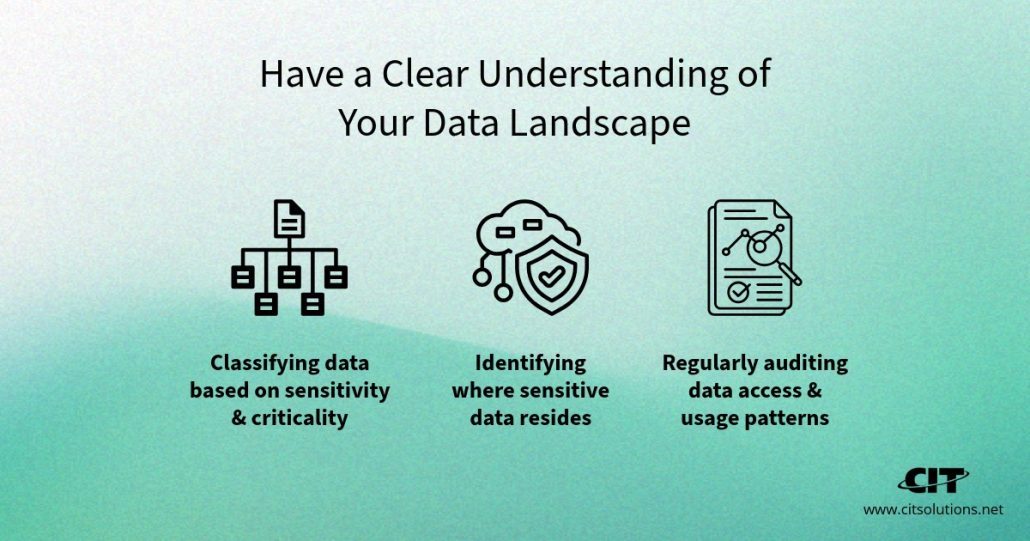
Before implementing AI systems, organizations must have a clear understanding of their data landscape. This involves:
- Classifying data based on sensitivity and criticality
- Identifying where sensitive data resides within the organization
- Regularly auditing data access and usage patterns
Data classification enables granular policy enforcement and helps prioritize protection measures for the most sensitive information. Regular audits ensure ongoing compliance and help identify potential vulnerabilities or misuse of AI systems.
Aligning with AI Governance Frameworks
Organizations should align their AI governance practices with established frameworks such as:
1. NIST AI Risk Management Framework (AI RMF):
- Emphasizes governance, risk mapping, measurement, and management
- Provides a structured approach to managing AI risks throughout the system lifecycle
2. ISO 27001:2022:
- While not AI-specific, it provides a solid foundation for information security management
- Can be adapted to address AI-specific risks within the broader context of information security
Adopting these frameworks helps ensure a comprehensive and standardized approach to AI governance.
Ensuring Accountability and Human Oversight
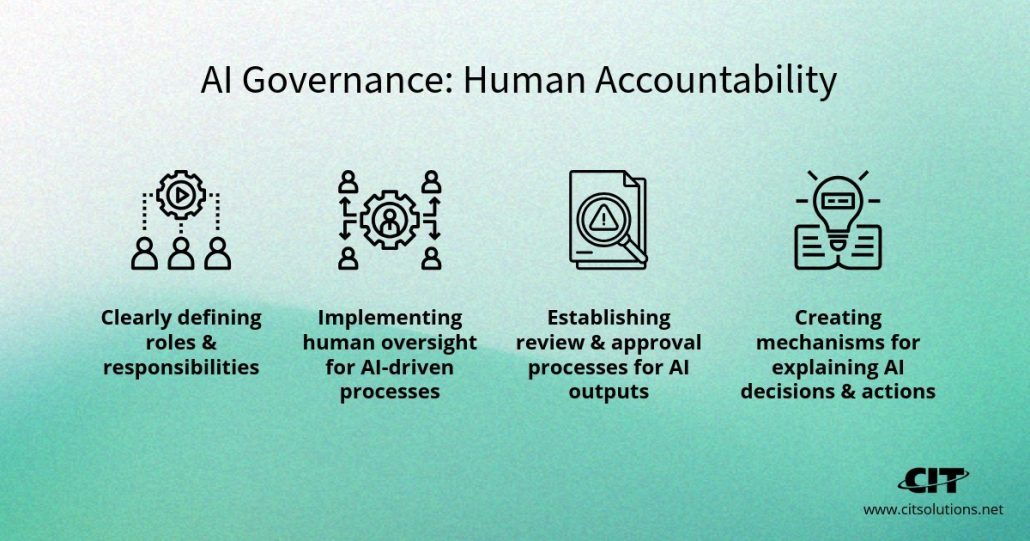
A critical aspect of AI governance is maintaining human accountability. This involves:
- Clearly defining roles and responsibilities for AI system management
- Implementing meaningful human oversight for AI-driven processes
- Establishing review and approval processes for AI outputs, especially those used externally
- Creating mechanisms for explaining AI decisions and actions
By maintaining human oversight, organizations can mitigate risks associated with AI autonomy and ensure that AI systems align with human values and organizational goals.
Implementing a robust AI governance framework is an ongoing process that requires continuous evaluation and adjustment. As AI technologies evolve, so too must the governance structures that oversee them. By focusing on clear policies, data management, alignment with established frameworks, and human accountability, organizations can create a solid foundation for responsible and secure AI adoption.
Implementing Technical Controls for AI Security
The implementation of robust technical controls forms the backbone of an organization’s defense against AI-related data leakage. These controls provide the necessary tools to enforce policies, detect anomalies, and prevent unauthorized access to sensitive data. Key components of this technical framework include:
Data Loss Prevention (DLP) Frameworks
DLP solutions are critical in monitoring, detecting, and preventing unauthorized data transmission or leakage. They operate across three key states of data:
- Data at rest: Protecting information stored in databases, servers, or storage systems
- Data in motion: Safeguarding data as it moves through networks, email, or APIs
- Data in use: Securing data actively processed on endpoints or applications
Modern DLP solutions leverage AI and machine learning to enhance detection capabilities, identifying subtle patterns that might indicate data exfiltration attempts. They can be deployed at the network, endpoint, cloud, and email levels, providing comprehensive coverage across the entire IT infrastructure.
Zero Trust Architecture (ZTA)

ZTA operates on the principle of “never trust, always verify.” This approach is particularly relevant in the context of AI security, where traditional perimeter-based security models are insufficient. Key aspects of ZTA include:
- Continuous authentication and authorization for all users, devices, and applications
- Micro-segmentation to limit lateral movement within the network
- Least privilege access, ensuring users only have access to the resources they absolutely need
By implementing ZTA, organizations can significantly reduce the risk of unauthorized AI tools accessing sensitive data or legitimate AI applications being compromised.
Endpoint Protection and Control
With the proliferation of remote work and BYOD policies, endpoint security has become more critical than ever. Key measures include:
- Application allowlisting to prevent unauthorized AI tools from running on endpoints
- Ringfencing to control what permitted applications can do and access
- Granular storage control to prevent unauthorized data transfers to external devices or cloud services
- Advanced Endpoint Detection and Response (EDR) solutions that can identify and mitigate threats in real-time
Network and Cloud Security Measures
As organizations increasingly rely on cloud services and AI applications, robust network and cloud security measures are essential:
- Secure Web Gateways (SWG) to filter malicious web traffic and block access to unauthorized AI tools
- Cloud Access Security Brokers (CASB) to provide visibility into SaaS usage, detect shadow AI, and enforce data security policies in the cloud
- Secure Access Service Edge (SASE) frameworks that combine networking and security functions to protect data and applications across any cloud
Identity and Access Management (IAM)
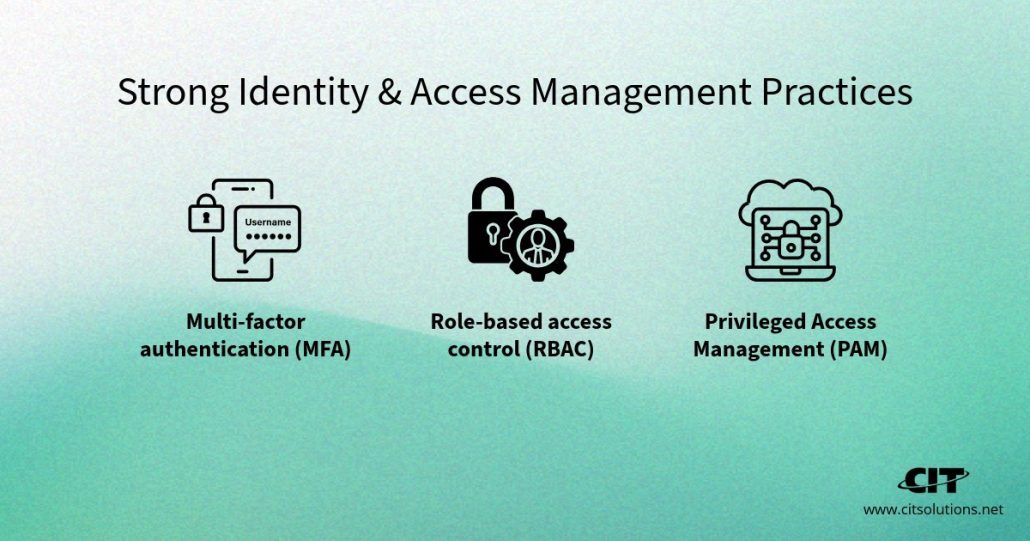
Strong IAM practices are crucial in controlling access to AI tools and the data they process:
- Multi-factor authentication (MFA) to prevent unauthorized access even if credentials are compromised
- Role-based access control (RBAC) to ensure users only have access to the AI tools and data necessary for their job functions
- Privileged Access Management (PAM) to monitor and control access to high-risk systems and data
By implementing these technical controls in a layered, integrated approach, organizations can significantly enhance their ability to protect sensitive data from AI-related security risks. However, it’s important to remember that technology alone is not enough; these controls must be complemented by strong policies, regular audits, and ongoing employee education to create a comprehensive AI security strategy.
Fostering a Security-Aware Culture through AI-Focused Education
In the rapidly evolving landscape of AI technology, fostering a security-aware culture is paramount to safeguarding sensitive data. This culture shift begins with comprehensive, AI-focused education that transforms employees from potential vulnerabilities into proactive defenders against AI-related threats.
Tailored Security Awareness Training (SAT) for AI Risks
Security Awareness Training must evolve to address the unique challenges posed by AI technologies. This tailored approach should:
- Educate employees on the specific risks associated with AI tools, including data leakage, model poisoning, and adversarial attacks.
- Provide clear guidelines on responsible AI usage within the organization.
- Explain the potential consequences of mishandling sensitive data with AI tools.
- Offer practical, role-specific scenarios that employees might encounter in their daily work with AI.
By customizing the training content to reflect the organization’s AI usage policies and tools, employees gain relevant, actionable knowledge that directly applies to their work environment.
Continuous Engagement and Simulated Phishing Exercises
Effective security awareness is not a one-time event but an ongoing process. To maintain vigilance against AI-related threats:
- Conduct regular, brief training sessions to keep AI security top-of-mind.
- Implement simulated phishing exercises that incorporate AI-generated content to test and improve employee detection skills.
- Provide immediate feedback and additional training for employees who fall for simulated attacks.
- Gamify the learning process with leaderboards or rewards for consistently secure behavior.
These continuous engagement strategies ensure that employees remain alert to evolving AI threats and are prepared to respond appropriately.
Leveraging AI-Powered Personalization in Training
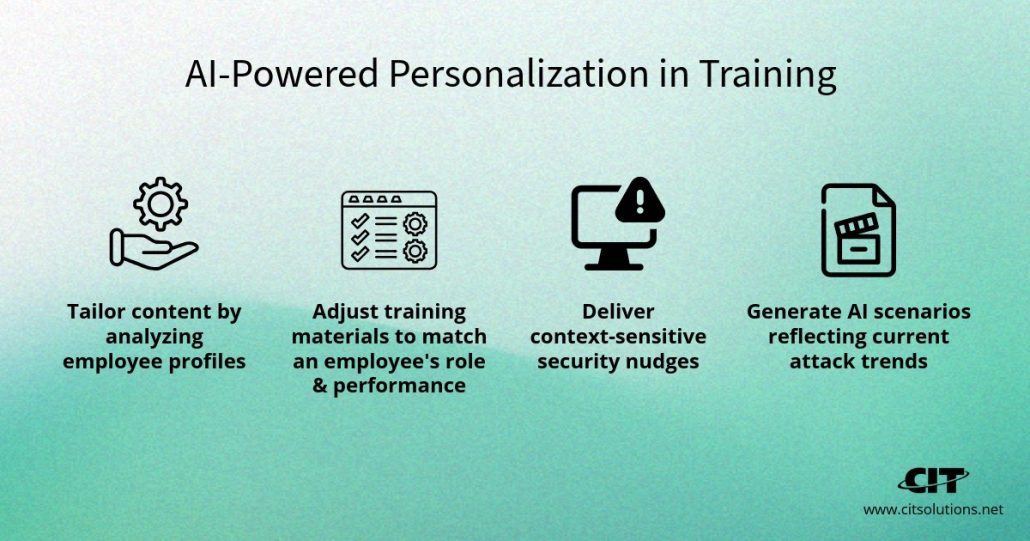
Ironically, AI itself can be a powerful ally in preparing employees to handle AI-related security risks. AI-powered personalization in training can:
- Analyze individual employee behavior and risk profiles to tailor content delivery.
- Adapt the difficulty and focus of training materials based on an employee’s role, department, and previous performance.
- Provide real-time, context-aware security nudges when employees interact with AI tools.
- Generate dynamic, AI-crafted scenarios that reflect the latest threat landscapes and attack vectors.
This personalized approach ensures that each employee receives the most relevant and impactful training, maximizing retention and application of security principles.
Transforming Employees into a Proactive Defense Layer
The ultimate goal of AI-focused security education is to transform employees from potential weak links into a proactive, human-centric defense layer. This transformation involves:
- Empowering employees to recognize and report suspicious AI-related activities.
- Encouraging a culture of open communication about AI security concerns.
- Providing clear escalation paths for reporting potential AI misuse or data leakage.
- Recognizing and rewarding employees who demonstrate exceptional AI security awareness.
By fostering this proactive mindset, organizations create a human firewall that complements technical controls, significantly enhancing overall security posture in the face of AI-related threats.
A robust, AI-focused security education program is essential for organizations leveraging AI technologies. By tailoring content, maintaining continuous engagement, leveraging AI for personalization, and fostering a proactive security culture, companies can significantly mitigate the risks associated with AI adoption while empowering their workforce to be the first line of defense against emerging threats.
Continuous Monitoring and Adaptation to Evolving AI Threats
In the rapidly evolving landscape of AI technology, static security measures are insufficient. Organizations must adopt a dynamic approach to safeguarding their AI systems and the sensitive data they process. This involves implementing robust continuous monitoring practices and regularly adapting security measures to address emerging threats.
Importance of Real-Time Monitoring of AI System Outputs
Real-time monitoring of AI system outputs is crucial for detecting potential data leaks or unauthorized access attempts. This involves:
- Implementing automated systems that analyze AI outputs for sensitive information
- Setting up alerts for unusual patterns or anomalies in AI-generated content
- Continuously assessing the alignment of AI outputs with predefined security policies
By maintaining vigilant oversight of AI system outputs, organizations can quickly identify and mitigate potential security breaches before they escalate.
Regular Audits of Security Configurations and Policies
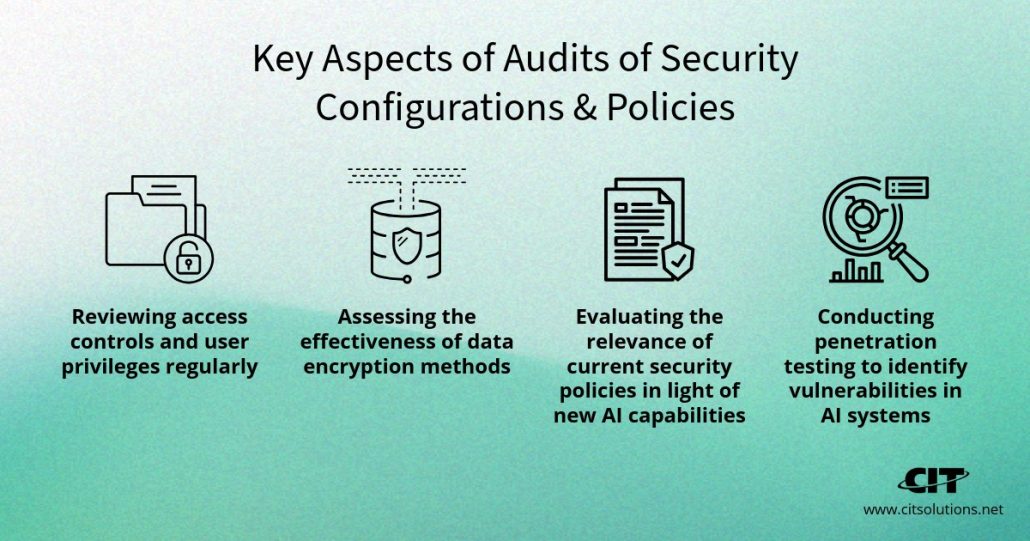
Periodic audits of AI security configurations and policies are essential to ensure they remain effective against evolving threats. Key aspects include:
- Reviewing access controls and user privileges regularly
- Assessing the effectiveness of data encryption methods
- Evaluating the relevance of current security policies in light of new AI capabilities
- Conducting penetration testing to identify vulnerabilities in AI systems
These audits help organizations stay ahead of potential security gaps and ensure their defenses remain robust.
Adapting Security Measures to Emerging AI-Driven Threats
As AI technologies advance, so do the tactics of malicious actors. Organizations must proactively adapt their security measures to counter new threats:
- Staying informed about the latest AI-related security vulnerabilities and attack vectors
- Updating security protocols to address newly discovered risks
- Implementing adaptive security solutions that can evolve with changing threat landscapes
- Collaborating with industry peers and security researchers to share insights on emerging threats
This proactive approach enables organizations to maintain a strong security posture in the face of rapidly evolving AI-driven threats.
Leveraging AI for Enhanced Threat Detection and Response
Ironically, AI itself can be a powerful tool in defending against AI-related security threats. Organizations should consider:
- Implementing AI-powered security information and event management (SIEM) systems
- Utilizing machine learning algorithms to detect anomalies and potential threats in real-time
- Deploying AI-driven automated response systems to quickly contain and mitigate security incidents
- Leveraging predictive analytics to anticipate and prepare for potential future threats
By harnessing the power of AI for security purposes, organizations can create more robust and responsive defense mechanisms against sophisticated AI-driven attacks.
Continuous monitoring and adaptation are essential components of a comprehensive AI security strategy. By remaining vigilant, regularly assessing security measures, and leveraging AI for enhanced protection, organizations can significantly reduce the risks associated with AI-related data leakage and unauthorized access.
Key Takeaways & Next Steps:
Here are the key takeaways and recommended next steps to bolster your organization’s data protection:
- Proactive Risk Assessments are Crucial: Don’t wait for a breach. Regularly assess how AI is changing your threat landscape and identify new vulnerabilities.
- Invest in AI-Powered Security Tools: Leverage AI for anomaly detection, predictive analysis, and automated threat response to stay ahead of sophisticated attacks.
- Prioritize Data Governance and Quality: AI models are only as good as the data they’re trained on. Implement robust data governance frameworks to ensure data integrity, privacy, and security.
- Develop a Comprehensive Incident Response Plan: Your plan must evolve to address AI-driven attacks and include strategies for rapid detection, containment, and recovery.
- Foster a Culture of Security Awareness: Human error remains a significant vulnerability. Educate your employees on AI-related risks and best practices for data protection.
- Stay Informed and Adaptable: The AI and cybersecurity landscape is constantly evolving. Continuously monitor emerging threats and technological advancements to adapt your strategies accordingly.
Ready to strengthen your AI-driven data protection strategy?
- Explore our comprehensive cybersecurity solutions
- Contact us for a personalized AI security consultation