The AI Security Balancing Act: Mitigating Risks While Enabling Innovation
The AI Revolution: Why Your Business Needs an AI Usage Policy Now
Picture this: you’re a business owner who has recently discovered the incredible potential of artificial intelligence (AI) in transforming your operations. From chatbots that provide top-notch customer service to advanced analytics that help you make data-driven decisions, AI has become an indispensable tool in your company’s toolkit. It’s like having a super-smart assistant working tirelessly to streamline your processes and give you a competitive edge.
But here’s the thing – with great power comes great responsibility. While AI can be a game-changer for your business, it can also open up a whole new world of security risks and vulnerabilities. Imagine AI as a master key that can unlock incredible opportunities, but in the wrong hands, it could also jeopardize your sensitive data, intellectual property, and compliance standards. It’s a bit like giving a teenager the keys to a sports car – exhilarating but potentially dangerous if not handled properly.
This is where AI usage policies come into play. Think of them as a roadmap for navigating the complex landscape of AI adoption. Just as you wouldn’t embark on a road trip without a GPS, you shouldn’t integrate AI into your business without clear guidelines in place. These policies are like guardrails that keep your employees on track and ensure that everyone is using AI responsibly and securely.
Now, you might be thinking, “But my employees are trustworthy – do we really need a formal policy?” Well, even the most well-intentioned employees can inadvertently expose your company to risks if they’re using AI tools without proper oversight. It’s like letting your kids explore the internet unsupervised – they might stumble upon something inappropriate or even dangerous without meaning to.
That’s where the concept of “shadow AI” comes in. Just as shadow IT refers to the use of unauthorized software and devices, shadow AI describes the unmanaged and unsanctioned use of AI applications. It’s like having a secret AI lab operating within your company, outside the purview of your IT department. While this might sound exciting, it can lead to all sorts of problems, from data breaches to compliance violations.
So, what can you do to harness the power of AI while keeping your business secure? The answer lies in developing a comprehensive AI usage policy. But don’t worry – this doesn’t mean stifling innovation or bogging down your employees with red tape. A good AI usage policy should empower your team to use AI effectively while providing clear guidelines for responsible use.
Think of your AI usage policy as a trusty guidebook that helps your employees navigate the AI landscape with confidence. It should cover everything from data handling and privacy protection to protocols for using specific AI tools. By creating a culture of awareness around AI-specific risks, you can ensure that everyone in your organization is on the same page when it comes to using AI safely and ethically.
Crafting an effective AI usage policy may seem daunting, but it’s essential for any business that wants to stay ahead of the curve in today’s AI-driven landscape. With the right policy in place, you can:
- Unlock the full potential of AI
- Safeguard your company’s most valuable assets
- Protect your business from data breaches and compliance violations
It’s like having a seatbelt for your AI initiatives – a small but crucial step that can protect you from a world of hurt down the road.
So, don’t wait until it’s too late – start developing your AI usage policy today. Your future self (and your company’s bottom line) will thank you for it. And if you need a little help along the way, remember that there are resources and experts available to guide you through the process. With a clear policy in place, you can confidently embrace the AI revolution and take your business to new heights.
Understanding Key AI-Specific Security Risks
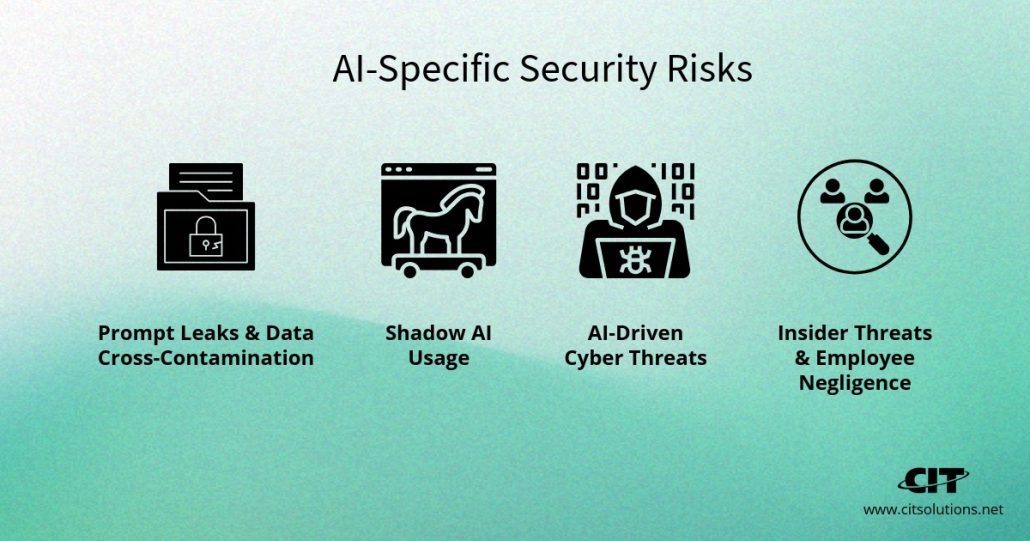
As your organization eagerly embraces the transformative potential of AI, it’s crucial to recognize that this exciting journey also introduces a new realm of security challenges. These AI-specific risks are not to be feared, but rather understood and strategically addressed. By diving deep into these concerns, you can develop a nuanced understanding and implement targeted mitigation strategies to safeguard your organization’s valuable data and reputation.
Prompt Leaks and Data Cross-Contamination: The Unseen Dangers
Imagine Large Language Models (LLMs) as incredibly powerful, yet somewhat forgetful, employees. They diligently process and retain the information you provide, but sometimes, sensitive data like proprietary code or confidential documents can inadvertently slip into their memory. This data may be logged, cached, or retained by the AI model, often beyond your direct control. It’s like accidentally cc’ing the entire company on a private email – but with far more complex consequences.
Even more concerning is the risk of data cross-contamination. It’s akin to that forgetful employee suddenly reciting snippets of confidential information in response to unrelated questions. This can occur when LLMs, especially those fine-tuned on your internal documents, reproduce specific phrases or private information in subsequent queries. This risk persists even in internal deployments if access controls are inadequate or if training data wasn’t properly sanitized.
Shadow AI Usage: The Unsanctioned Productivity Boost
The proliferation of easily accessible AI tools has led to a phenomenon called “shadow AI” – the unsanctioned use of AI applications by employees. It’s understandable why this happens. Your employees, driven by a desire for increased productivity or faced with a perceived lack of official alternatives, may secretly turn to AI tools to boost their efficiency. However, this unmonitored usage creates substantial data exfiltration risks, as employees may unknowingly share sensitive information with external AI platforms. Shadow AI significantly expands your organization’s attack surface, introducing unmanaged risks and creating critical compliance gaps.
AI-Driven Cyber Threats: The Evolving Battlefield
As AI capabilities advance, so too do the sophistication of cyber threats. It’s an unfortunate reality that attackers are leveraging AI to automate and scale their operations. They’re creating more convincing phishing campaigns that can deceive even the most cautious employees. They’re developing adaptive malware that can evade traditional detection methods, slipping through your defenses like a chameleon. And they’re manipulating AI APIs to extract sensitive data, exploiting the very tools designed to enhance your operations.
This AI-powered evolution of threats necessitates equally advanced AI-driven defense mechanisms, creating an ongoing “AI arms race” in the cybersecurity landscape. It’s a constant battle to stay one step ahead, to develop smarter and more resilient security measures that can adapt to the ever-changing tactics of AI-enhanced attackers.
Insider Threats and Employee Negligence: The Human Factor
While not unique to AI, the risks of insider threats and employee negligence are amplified in AI-integrated environments. The complexity and often opaque nature of AI systems increase the potential for accidental misuse or misconfiguration. It’s like handing the keys of a high-performance sports car to a novice driver – the power is immense, but so is the potential for unintended consequences.
Employee negligence, such as improper data handling or inadvertent sharing of information with AI tools, can lead to significant data exposure. It’s a simple mistake, like forgetting to lock the office door, but with far-reaching implications. Moreover, the power of AI tools in processing and generating information means that a single instance of misuse can have a ripple effect, impacting multiple systems and datasets.
Navigating the AI Security Landscape
As you navigate this new landscape of AI-specific security risks, it’s essential to approach it with a strategic mindset. Traditional security measures often fall short in addressing these unique challenges, necessitating a fresh approach that combines robust technological solutions with enhanced employee training and awareness programs.
By understanding these risks and proactively addressing them, you can harness the transformative potential of AI while maintaining the integrity and security of your organization’s data. It’s a journey that requires ongoing vigilance, adaptability, and a commitment to staying at the forefront of AI security best practices.
Remember, AI is not the enemy – it’s a powerful tool that, when wielded with care and understanding, can propel your organization to new heights. By confronting these AI-specific security risks head-on, you’re not only protecting your organization, but also positioning yourself as a leader in the responsible and secure adoption of AI technologies.
Global Standards and Guidelines for AI Governance: Navigating the Landscape of Responsible AI Adoption
As your organization increasingly integrates AI into its operations, you may find yourself grappling with the complexities of AI governance. It’s like embarking on a journey through uncharted territory, where the path to success is paved with ethical considerations, risk management strategies, and regulatory compliance. But fear not! Just as a trusty map and compass can guide you through the wilderness, several international bodies have developed standards and guidelines to help you navigate the landscape of AI adoption and risk management.
NIST AI Risk Management Framework (AI RMF): Your Compass for AI Risk Management
Imagine the NIST AI Risk Management Framework as your compass, guiding you through the entire AI lifecycle. This voluntary framework is designed to foster innovation while addressing potential threats associated with AI deployment. It’s like having an experienced trail guide by your side, helping you establish organizational structures and processes for AI risk management (Govern), identify and assess AI-related risks (Map), quantify AI system performance and effectiveness (Measure), and implement strategies to mitigate risks and ensure compliance (Manage).
The AI RMF also introduces maturity tiers (Partial, Risk-Informed, Repeatable, Adaptive) to help you assess your progress in AI risk management. Think of these tiers as checkpoints along your journey, allowing you to gauge how far you’ve come and how much further you need to go. By following the NIST AI RMF, you can build a foundation for ethical, secure, and transparent AI practices that strengthen public trust – it’s like leaving a positive impact on the environment as you blaze your trail.
ISO/IEC 42001 for AI Management Systems: Your Blueprint for Responsible AI
If the NIST AI RMF is your compass, then ISO/IEC 42001 is your blueprint for building a robust Artificial Intelligence Management System (AIMS). Developed by the International Organization for Standardization (ISO) and the International Electrotechnical Commission (IEC), this standard specifies requirements for establishing, implementing, maintaining, and continually improving an AIMS within your organization.
Think of ISO/IEC 42001 as a master plan that covers all the key aspects of responsible AI development, deployment, and operation. It’s like having a team of expert architects and engineers guiding you through the construction of your AI systems, ensuring that you have a solid foundation in governance, comprehensive risk management, impact assessment, third-party supplier oversight, and the promotion of ethical AI principles (transparency, fairness, accountability).
The standard follows a structured Plan-Do-Check-Act (PDCA) approach, which helps you monitor your AI systems, make necessary improvements, and adapt to new challenges – it’s like having a built-in maintenance crew that keeps your AI infrastructure in top shape. By achieving ISO/IEC 42001 certification, you can significantly enhance your organization’s ability to build transparent, trustworthy, and ethical AI systems, establishing yourself as a leader in the field.
Charting Your Course to Responsible AI
As you embark on your AI journey, remember that global standards and guidelines provide a comprehensive framework for developing and implementing responsible AI practices. By adhering to these principles, you can not only mitigate risks associated with AI deployment but also build trust with stakeholders and position your organization as a leader in ethical AI adoption.
Think of these frameworks as your map, compass, blueprint, and guideposts – they’re here to help you navigate the complex landscape of AI governance and arrive at your destination of responsible, trustworthy, and innovative AI. So, chart your course, follow your guides, and enjoy the journey – the future of AI is bright, and you’re well-equipped to make the most of it!
The framework also introduces maturity tiers (Partial, Risk-Informed, Repeatable, Adaptive) to help organizations assess their progress in AI risk management. By following the NIST AI RMF, organizations can build a foundation for ethical, secure, and transparent AI practices that strengthen public trust.
Developing Comprehensive AI Usage Policies: Your Guide to Responsible AI Adoption
As your organization embraces the transformative power of AI, it’s crucial to establish a solid foundation for responsible and ethical use of this technology. Think of AI as a powerful tool in your toolkit – just like any tool, it needs clear instructions and boundaries to ensure it’s used safely and effectively. That’s where comprehensive AI usage policies come into play.
Establishing Clear Acceptable Use Guidelines: Setting the Rules of the Game
Imagine you’re a coach of a sports team. Before the game starts, you gather your players and lay out the game plan – what positions they’ll play, what strategies they’ll use, and what actions are off-limits. The same principle applies to AI usage in your organization.
By setting clear acceptable use guidelines, you’re defining the rules of the game for your employees. This includes:
- Specifying which AI tools are approved for use
- Outlining permitted applications of AI
- Strictly prohibiting any illegal, unethical, or discriminatory uses
- Mandating the reporting of any suspected misuse or security incidents
- Detailing the consequences of policy violations
By communicating these guidelines clearly, you ensure that your team fully understands the risks and responsibilities associated with AI usage, particularly when it comes to handling sensitive data.
Defining Data Boundaries for AI Workloads: Building Fences Around Your Data
Data is the lifeblood of AI, but it’s also your most valuable and sensitive asset. Think of your data as a garden – you want to nurture and grow it, but you also need to protect it from unauthorized access and misuse.
Defining clear data boundaries is like building a fence around your garden. Here’s how you can do it:
- Classify your data based on sensitivity and regulatory requirements
- Specify which types of data can be processed by AI systems
- Implement strict controls on data flow between different AI workloads
- Ensure that sensitive data remains within approved geographical or jurisdictional boundaries
- Mandate data minimization principles to limit the exposure of unnecessary information
With these boundaries in place, you can prevent inadvertent data access and cross-contamination between different AI applications and user groups.
Implementing Granular Access Controls: The Keys to Your AI Kingdom
Just as you wouldn’t give the keys to your house to just anyone, you need to carefully control who has access to your AI tools and the data they process. This is where granular access controls come into play.
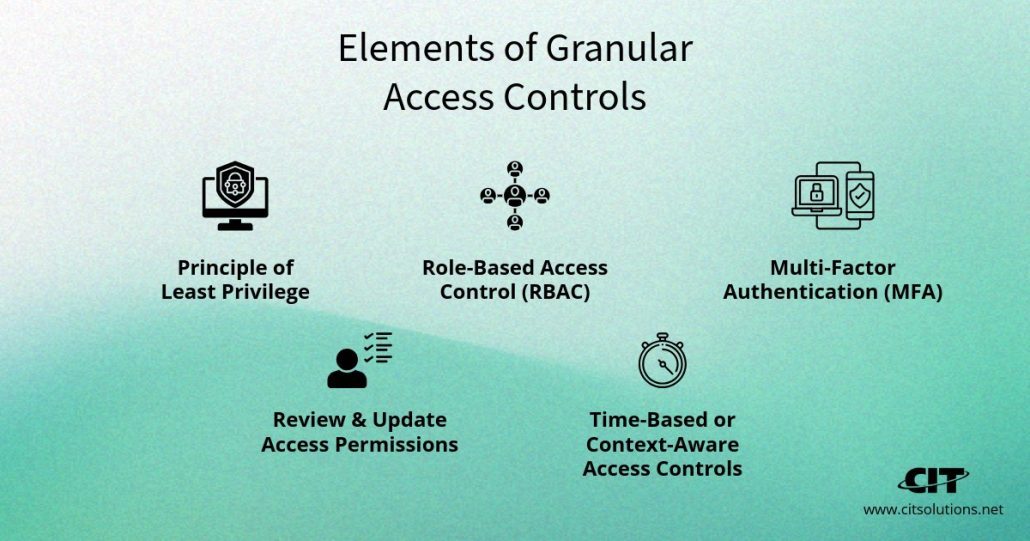
Here’s how you can implement effective access controls:
- Enforce the principle of least privilege, granting users only the access they need to perform their tasks
- Implement role-based access control (RBAC) for your AI systems and associated data
- Require multi-factor authentication (MFA) for accessing sensitive AI tools or data
- Regularly review and update access permissions to ensure they remain aligned with user roles and responsibilities
- Consider implementing time-based or context-aware access controls for highly sensitive AI operations
By implementing these granular access controls, you can significantly reduce the risk of unauthorized access, data breaches, and misuse of your AI systems.
Building a Foundation for Responsible AI
Developing comprehensive AI usage policies may seem like a daunting task, but by focusing on these three key areas – clear guidelines, data boundaries, and access controls – you can create a robust foundation for responsible AI adoption in your organization.
Think of your AI usage policies as the building blocks for a strong, secure, and ethical AI strategy. By laying this foundation, you not only protect your organization against security risks but also foster a culture of responsible AI usage that will benefit your business for years to come.
As you embark on this journey, remember that you’re not alone. There are experts and resources available to guide you through the process of developing and implementing effective AI usage policies. By taking a proactive and comprehensive approach, you can harness the power of AI while ensuring the security and integrity of your data and systems.
Protecting Your AI Systems: Essential Strategies to Prevent Prompt Injection and Data Leakage
As your organization embraces the power of AI, particularly Large Language Models (LLMs), it’s crucial to be aware of the potential risks that come with this exciting technology. Imagine your AI system as a trusted employee, handling sensitive information and making critical decisions. Just like you would take steps to ensure the security and integrity of your human workforce, it’s essential to implement robust strategies to safeguard your AI systems from prompt injection attacks and data leakage.
Understanding the Risks: Prompt Injection and Data Leakage
Picture this: a malicious actor manages to manipulate the input prompts of your AI system, tricking it into revealing confidential data or producing harmful outputs. This is the essence of a prompt injection attack, and it can have severe consequences for your business. Similarly, data leakage occurs when sensitive information is inadvertently exposed through the AI’s responses. These vulnerabilities can lead to:
- Unauthorized access to sensitive information
- Manipulation of AI outputs
- Breaches of data privacy
To protect your organization from these risks, it’s time to take action and implement a comprehensive AI security strategy.
Input Validation and Sanitization: Your First Line of Defense
Think of input validation and sanitization as a vigilant gatekeeper, carefully examining every piece of data that enters your AI system. By developing a comprehensive list of allowed characters, formats, and structures, you can ensure that only safe and valid inputs reach your AI model. Any input that doesn’t meet these predefined criteria is rejected or sanitized, preventing malicious actors from inserting harmful code or commands.
Context-Aware Filtering: Going Beyond Basic Input Validation
While input validation is essential, it’s not always enough to catch subtle manipulations. That’s where context-aware filtering comes in. Imagine having a wise advisor who understands the broader context of each AI interaction, analyzing the relevance and safety of input prompts based on the ongoing conversation or task. By identifying and blocking suspicious prompts that deviate from the expected flow, context-aware filtering adds an extra layer of protection against prompt injection attacks.
Output Encoding: Safeguarding the Responses of Your AI
Just as you secure the inputs to your AI system, it’s equally important to safeguard the outputs. Output encoding acts as a protective shield, converting potentially harmful characters or structures in the AI’s responses into a safe format. This prevents cross-site scripting attacks, accidental execution of commands, and other risks associated with displaying AI-generated content.
Regular LLM Updates and Fine-Tuning: Staying Ahead of Evolving Threats
In the fast-paced world of AI security, new vulnerabilities and attack vectors emerge regularly. To stay one step ahead, it’s crucial to commit to regular updates and fine-tuning of your LLMs. By applying the latest security patches and retraining your models with up-to-date datasets that include examples of recent threats, you can significantly improve your AI’s ability to recognize and resist prompt injection attempts, enhance its understanding of context, and reduce the likelihood of data leakage.
Embracing AI Security as an Ongoing Process
Implementing these strategies comprehensively and consistently is key to reducing the risks associated with prompt injection and data leakage in your AI systems. However, it’s important to remember that AI security is not a one-time task, but an ongoing process that requires continuous vigilance, adaptation, and improvement.
By staying proactive and embracing a culture of AI security, your organization can confidently harness the power of LLMs while effectively protecting sensitive data and maintaining the integrity of your AI interactions. With the right strategies in place, you can build trust with your stakeholders, customers, and partners, positioning your business as a leader in responsible AI adoption.
Managing Third-Party AI Tool Integration and Risks
As you navigate the complex landscape of AI adoption, it’s crucial to understand the potential risks associated with integrating third-party AI tools into your organization’s ecosystem. This is especially true when external vendors may not have the same level of robust security protocols in place. To protect your business and mitigate these risks, you’ll need to establish clear policies for managing third-party relationships and tools. Let’s dive into some key areas to focus on.
Conducting a Thorough Vendor Risk Assessment
Imagine you’re about to embark on a long journey with a new travel companion. You’d want to make sure they’re reliable, trustworthy, and have a proven track record of safety, right? The same principle applies when considering the adoption of any third-party AI tool. A comprehensive vendor risk assessment process is essential. Here’s what it should include:
- Evaluation of the vendor’s security practices and certifications
- Review of their data handling and privacy policies
- Assessment of their compliance with relevant industry standards and regulations
- Analysis of their incident response capabilities and history
- Examination of their AI model development and training practices
Think of this assessment as a background check for your potential AI partner. By establishing a formal process for approving all AI-related purchases and integrations, you can ensure that new tools undergo rigorous security and privacy vetting before deployment. This way, you can travel with confidence, knowing your companion has been thoroughly vetted.
Understanding Data Sovereignty Considerations
In the era of cloud-based AI services, data sovereignty has become a hot topic. It’s like choosing where to store your valuables – you want to know they’re in a secure location and subject to laws that protect your interests. When using third-party AI tools, you must be aware of where your data is processed and stored. Here are some key considerations:
- Identifying the physical location of data centers used by the AI service provider
- Understanding the legal jurisdictions that may apply to the data
- Ensuring compliance with local and international data protection regulations
- Considering the use of regional or country-specific instances of AI services when available
Imagine your data as a precious artifact. You wouldn’t want it housed in a foreign museum without proper safeguards and agreements in place. Similarly, your policies should prohibit the handling of sensitive business data by tools hosted in non-sovereign jurisdictions unless explicitly approved and necessary for business operations. This ensures your data remains under your control and protection.
Prioritizing Privacy Feature Requirements
Privacy is like a lock on your data’s door – the more robust the lock, the safer your information. When selecting third-party AI tools, prioritize those that offer strong privacy features. Here are some essential privacy features to look for:
- End-to-end encryption for data in transit and at rest
- Clear data minimization policies and practices
- User authentication and access controls
- Anonymization or pseudonymization capabilities for sensitive data
- Audit logs for all data access and processing activities
- Data deletion and portability options
In addition to these features, make sure the vendors you work with conduct regular security audits and vulnerability assessments by independent third parties. This is like having a trusted inspector regularly check the locks and security systems on your data’s door. Your contractual agreements with AI tool providers should include clauses that mandate adherence to your organization’s privacy and security standards, as well as provisions for regular audits and assessments. This way, you can ensure your data remains private and secure, even when working with external partners.
Empowering Your Workforce: The Key to Robust AI Security
In the fast-paced world of AI adoption, it’s easy to focus solely on the technological aspects of security. However, as you navigate this complex landscape, it’s crucial to recognize that your employees are both a potential vulnerability and a powerful line of defense. By prioritizing the human element in your AI security strategy, you can transform potential weaknesses into robust safeguards, ensuring the protection of your sensitive data and the success of your AI initiatives.
Designing Role-Based AI Security Training: Tailoring Knowledge to Your Team’s Needs
One size does not fit all when it comes to AI security training. Your developers, data scientists, executives, and general staff each interact with AI systems in unique ways, facing distinct security challenges. To effectively address these challenges, it’s essential to design role-based training programs that focus on:
- AI-specific security risks relevant to each role
- Best practices for secure AI development and deployment
- Data handling protocols and privacy considerations
- Regulatory compliance requirements
- Ethical considerations in AI usage
By customizing training content, you ensure that your employees receive relevant, actionable information that directly applies to their day-to-day interactions with AI systems. This targeted approach empowers your team to make informed decisions and proactively mitigate security risks.
Cultivating a Security-First Culture: Making AI Security a Team Effort
Training alone is not enough to guarantee robust AI security. To truly safeguard your organization, you must actively foster a culture where security is at the forefront of all AI-related activities. This involves:
- Clear communication of AI usage policies and their importance
- Encouraging open dialogue about AI security concerns
- Recognizing and rewarding secure AI practices
- Integrating security considerations into AI project planning and execution
- Leading by example, with management demonstrating commitment to AI security
Imagine a workplace where every employee, from the intern to the CEO, understands the importance of AI security and feels empowered to make responsible decisions. This is the essence of a security-first culture – a powerful force that transforms your workforce into a proactive, vigilant defense against AI-related threats.
Continuous Education and Simulated Exercises: Staying Ahead of Evolving Threats
In the world of AI, change is the only constant. New threats emerge, best practices evolve, and your team must be ready to adapt. To ensure that your workforce remains vigilant and prepared, it’s essential to implement an ongoing approach to education and awareness. This includes:
- Regular updates on emerging AI security threats and best practices
- Hands-on workshops to practice secure AI usage
- Simulated AI security incidents to test response readiness
- Gamified learning experiences to increase engagement
- Peer-to-peer knowledge sharing sessions
Think of it as a never-ending game of chess against potential adversaries. By providing continuous learning opportunities and practical exercises, you equip your team with the skills and knowledge they need to stay one step ahead. This proactive approach transforms your employees from potential vulnerabilities into a dynamic, adaptive defense against AI-related threats.
Technological Solutions for AI Security and Data Protection
As your organization increasingly integrates AI into its operations, you may be wondering about the robust technological solutions available to safeguard your sensitive data and ensure secure AI usage. In this section, we’ll explore the key technologies that form the backbone of a comprehensive AI security strategy, empowering you to protect your business and harness the full potential of AI with confidence.
Endpoint Detection and Response (EDR): Your AI Security Watchdog
Picture EDR solutions as vigilant watchdogs continuously monitoring your AI environment for any suspicious activities. Just as a loyal guard dog would alert you to an intruder, advanced EDR systems are evolving to detect anomalies specific to AI workflows, such as:
- Unusual data access patterns
- Unexpected model behaviors
These cutting-edge EDR solutions leverage AI themselves to identify complex threats that may evade traditional detection methods. Imagine an intelligent security system that can automatically respond to detected issues, isolating compromised endpoints or initiating predefined security protocols to mitigate potential data breaches in your AI environment, giving you peace of mind.
Identity and Access Management (IAM): The Gatekeeper of Your AI Kingdom
In the era of AI, robust IAM solutions are the gatekeepers controlling access to your AI tools and sensitive data. Think of IAM as a sophisticated bouncer at an exclusive event, ensuring that only authorized individuals gain entry. Modern IAM solutions go beyond simple username and password authentication, implementing:
- Multi-factor authentication
- Role-based access control (RBAC)
- Adaptive authentication mechanisms that consider the context of AI interactions
These IAM solutions provide you with comprehensive visibility into AI tool usage across your organization, helping you identify and manage “shadow AI” – the unauthorized use of AI applications by employees. By enforcing the principle of least privilege and maintaining detailed audit trails of AI system access, IAM serves as your critical line of defense against unauthorized data exposure.
Data Loss Prevention (DLP): Your AI Data Safety Net
Consider DLP technologies as your AI data safety net, evolving to address the unique challenges posed by AI systems. Advanced DLP solutions act as vigilant guardians, monitoring data flows to and from your AI models and applying content-aware policies to prevent unauthorized data exfiltration. These systems can:
- Identify and block attempts to input sensitive information into public AI tools
- Encrypt data in transit and at rest
- Provide granular controls over data usage within AI workflows
Imagine DLP technologies as smart filters, increasingly incorporating AI capabilities themselves to better understand context and intent, improving their ability to distinguish between legitimate AI use cases and potential data breaches.
Network Access Control (NAC): Your AI Traffic Controller
NAC solutions are like traffic controllers for your AI-enabled environment, adapting to the challenges of AI security by implementing zero-trust principles and microsegmentation. Just as a traffic controller manages the flow of vehicles on a busy road, NAC systems provide granular control over which devices and users can access your AI resources and data. They continuously authenticate and authorize every AI interaction, regardless of the user’s location or device.
Advanced NAC solutions offer AI-compatible contextual controls, allowing you to define and enforce precise policies based on factors such as:
- Device type
- User role
- Data sensitivity
- AI model criticality
By creating secure, isolated network segments for your AI workloads, NAC helps contain potential breaches and prevents unauthorized lateral movement within your network.
When implemented as part of a comprehensive AI security strategy, these technological solutions provide you with the tools necessary to protect sensitive data, ensure compliance, and foster responsible AI adoption. As AI technologies continue to evolve, these security solutions must adapt in tandem, leveraging AI capabilities themselves to stay ahead of emerging threats and vulnerabilities in AI ecosystems.
Continuous Monitoring and Adaptive Governance: The Keys to Robust AI Security
In the fast-paced world of artificial intelligence, you can’t afford to be reactive. As an organization embracing AI, you need to stay one step ahead of emerging threats and technological changes. That’s where continuous monitoring and adaptive governance come in – they’re your secret weapons for maintaining a strong AI security strategy.
Real-time Monitoring: Your AI Watchdog
Imagine having a vigilant watchdog constantly monitoring your AI tools, ready to bark at the first sign of trouble. That’s essentially what real-time monitoring systems do for your organization. They give you a bird’s eye view of how your AI tools are being used, who’s using them, and when.
With advanced monitoring solutions, you’ll have intuitive dashboards at your fingertips, displaying everything from application categories to user activity. It’s like having a crystal ball that helps you spot unauthorized usage, potential data breaches, or policy violations before they snowball into bigger problems.
Real-time monitoring is your all-in-one solution for:
- Detecting sneaky shadow AI and unauthorized tool adoption
- Spotting unusual patterns or anomalies in AI system behavior
- Keeping tabs on data flows and potential sensitive information exposure
- Ensuring compliance with internal policies and external regulations
- Providing actionable insights for your security team to swiftly tackle threats
Regular AI Risk Assessments: Your Safety Net
Just like how you go for regular check-ups to maintain your health, your AI systems need regular risk assessments to stay in tip-top shape. These assessments are your safety net, ensuring that your AI deployment and usage are secure and ethical.
When conducting these assessments, leave no stone unturned. Evaluate the security of your AI models and their training data, assess potential biases in decision-making processes, identify vulnerabilities in your infrastructure, analyze the impact on data privacy and compliance, and review access controls and authentication mechanisms.
To keep your assessments on track, establish a structured framework and stick to a regular schedule. Don’t forget to reassess whenever there are significant changes in the AI landscape or your internal systems. The results of these assessments will be your guiding light for updating policies and fortifying your security measures.
Adaptive Policy Reviews: Your Flexibility Superpower
In the realm of AI, change is the only constant. What works today might be obsolete tomorrow. That’s why static policies are a big no-no. To stay ahead of the game, you need to be flexible and adaptable, just like a superhero.
Implement a system of adaptive policy reviews to ensure your AI governance framework remains effective and aligned with current best practices. Schedule regular reviews, but also be ready to conduct ad-hoc reviews when significant events or changes occur in the AI landscape.
Bring in the experts from IT, security, legal, and business units to get a well-rounded perspective. Benchmark against industry standards and regulatory requirements, and don’t forget to learn from your own experiences, including close calls and incidents.
To make continuous improvement a breeze, follow a structured methodology like the Plan-Do-Check-Act (PDCA) cycle. This iterative approach allows you to refine your policies based on real-world experiences and emerging best practices, creating a more resilient and effective AI governance framework.
By implementing robust real-time monitoring, conducting regular risk assessments, and maintaining adaptive policy reviews, you’ll create a dynamic and responsive AI governance system that not only enhances security and compliance but also fosters an environment of responsible AI adoption.imately leading to greater trust and confidence in AI-driven initiatives.
Building a Resilient and Trustworthy AI-Ready Organization
As you embark on the journey of integrating AI into your organization, it’s crucial to understand that building a resilient and trustworthy AI-ready infrastructure goes beyond mere technological implementation. Imagine your organization as a living, breathing entity that needs to adapt and evolve with the changing landscape of AI. Just like nurturing a growing child, fostering an AI-ready organization requires a holistic approach that encompasses organizational culture, strategic decision-making, and forward-thinking regulatory compliance.
Weaving AI Governance into the Fabric of Your Organizational Culture
To truly become AI-ready, you must weave AI governance into the very fabric of your organization’s culture. Think of it as creating a tapestry, where each thread represents a key aspect of AI governance. By intertwining these threads, you create a strong, cohesive fabric that can withstand the challenges and uncertainties of the AI-driven future.
Here are the essential threads you need to weave into your organizational culture:
- Establishing clear AI ethics guidelines that align with your organization’s values
- Fostering open communication channels for discussing AI-related concerns and ideas
- Empowering employees at all levels to participate in AI governance processes
- Regularly updating and reinforcing AI policies through ongoing training and awareness programs
- Recognizing and rewarding responsible AI usage and innovation
By making AI governance a core part of your organizational culture, you ensure that responsible AI practices become second nature to all employees, reducing risks and fostering trust.
Striking the Right Balance Between Innovation and Security
One of the greatest challenges in becoming AI-ready is finding the sweet spot between fostering innovation and maintaining robust security measures. It’s like walking a tightrope, where leaning too far in either direction can lead to undesirable consequences. To achieve this delicate balance, consider the following strategies:
- Implement a “secure by design” approach to AI development and deployment
- Create sandbox environments for experimenting with new AI technologies safely
- Establish clear protocols for vetting and approving new AI tools and applications
- Develop risk assessment frameworks specifically tailored to AI innovations
- Encourage cross-functional collaboration between innovation teams and security experts
By carefully balancing innovation and security, you can harness the power of AI while minimizing potential risks and vulnerabilities.
Staying Ahead of the Curve: Preparing for Future AI Regulations
As AI technology evolves, so too will the regulatory landscape. Just like navigating a ship through uncharted waters, forward-thinking organizations must anticipate and prepare for future AI regulations to maintain compliance and competitive advantage. Here are some key strategies to help you stay ahead of the curve:
- Staying informed about emerging AI regulations and industry standards
- Participating in industry forums and discussions on AI governance
- Developing flexible AI policies that can adapt to changing regulatory requirements
- Investing in robust data management and AI auditing capabilities
- Building relationships with regulatory bodies and contributing to the development of AI standards
By proactively preparing for future AI regulations, you can position your organization as a leader in responsible AI adoption and minimize the risk of non-compliance penalties.
Key Takeaways and Next Steps
As we conclude this exploration of building an AI-ready organization, let’s recap the key takeaways:
- Embrace a comprehensive approach that addresses cultural integration, balances innovation with security, and anticipates future regulatory challenges.
- Foster a culture of responsible AI by establishing clear ethics guidelines, encouraging open communication, and empowering employees at all levels.
- Strike a balance between innovation and security by implementing secure design principles, creating safe experimentation environments, and encouraging cross-functional collaboration.
- Stay ahead of the curve by proactively preparing for future AI regulations through ongoing education, flexible policies, and robust data management practices.
Your next steps should focus on putting these insights into action. Start by assessing your organization’s current AI readiness and identifying areas for improvement. Engage stakeholders across the organization to develop a comprehensive AI governance framework that aligns with your values and goals. Foster a culture of continuous learning and adaptation, empowering your employees to embrace responsible AI practices.
Remember, building an AI-ready organization is an ongoing journey, not a destination. By staying committed to the principles of responsible AI, you can create a strong foundation for long-term success in the AI-driven future. Trust in the process, learn from your experiences, and always keep the well-being of your stakeholders at the forefront of your decision-making.
As you embark on this transformative journey, know that you are not alone. Seek guidance from experts, collaborate with industry peers, and leverage the power of community to navigate the challenges and opportunities that lie ahead. Together, we can build a future where AI is a force for good, driving innovation, efficiency, and societal progress.